Just being female puts you at an increased risk of migraines.
And living with migraine is bad enough, but knowing exactly (to the day) when you will get migraines can be even worse. Sufferers know that there will be a number of days each month that will be a wipeout.
That’s because menstrual migraines are triggered by the natural monthly fluctuation of hormones.
After reviewing the current medical approach, we will describe a migraine treatment that is safe and drug-free, and using it allows us to know quickly if we are helping.
Take home messages
- hormonal influences are a common trigger for migraines
- menstrual migraine is a defined subgroup of people who have migraines triggered by their menstrual cycle
- the medical management for mainly is pharmaceutical, either managing the acute attack or preventative
- there is a group of sufferers who can be helped enormously by the Watson Headache Approach which is safe and non-pharmacuetical
What is menstrual migraine?
Menstrual migraine is a migraine headache disorder that is linked to the menstrual cycle.
They are sometimes called hormonal migraines, hormonal headaches or period headaches.
Typically, these migraines occur at a predictable time of the menstrual cycle, in the days leading up to or during the first few days of the cycle. Additionally, they can also happen midcycle.
They have the typical head pain experience of migraine headache, and can be accompanied by symptoms like nausea, vomiting, and sensitivity to light or sound.
Interestingly they usually don’t involve aura.
The main thing that sets these apart from other types of migraine is the close association with the normal hormonal changes of the menstrual cycle.
Unsure about how to get relief for your headache or migraine problem?
Talk it through with a fully qualified Watson Headache-trained physio FREE OF CHARGE.
Get some advice about what your next move should be, and if our services would be suitable for you.
Call (08) 7282 0871 to organise a FREE PHYSIO PHONE CALL
How are they diagnosed?
According to the International Classification of Headache Disorders 3rd edition (ICHD-3), menstrual migraine can be classified into two categories:
Pure Menstrual Migraine: Migraine that occurs exclusively on day 1 ± 2 of menstruation (meaning up to two days before your period up to 2 days after your period) in at least two out of three menstrual cycles in a row.
Menstrually-Related Migraine: As per pure menstrual migraine but also happening during another phase of the menstrual cycle.
The diagnosis is made on the basis of a subjective examination (history-taking) and often a headache diary.
Typically, the neurological examination will be normal.
There are no tests or imaging that diagnose menstrual migraine.
Imaging and other testing can be used to exclude other potential causes eg intracranial pathologies like tumour.

Symptoms of menstrual migraine
Menstrual migraines have symptoms similar to those of other migraines, with the main difference being the timing with the menstrual cycle.
Typical symptoms as described by the International Headache Society are:
Severe Headache: Typically unilateral, throbbing headache starting just before or during menstruation, lasting 4-72 hours.
Associated Symptoms: Nausea and vomiting, photophobia (sensitivity to light), phonophobia (sensitivity to sound)
Menstrual migraine is less frequently associated with auras, which are the transient neurological symptoms that can precede the headache phase of a migraine.
Looking for an alternative to medication?
HAVE A FREE CHAT WITH A WATSON HEADACHE-TRAINED PHYSIO
Book online by clicking the button below or call us on (08) 7282 0871 to organise a time.
Learn about all your options from physios understand migraines.
How common is this type of migraine?
Migraines with a hormonal relationship are relatively common among women of reproductive age, affecting up to 60-70% of women who experience migraines.
Pure menstrual migraine is estimated to affect 7-14% of women with migraine.
According to the ICHD-3, migraine without aura often has a menstrual relationship but says ‘many women over-report an association between attacks and menstruation’.
This is unfortunate wording and could be read as a dismissive statement of the experience of female migraine sufferers.

Understanding why menstrual migraine happens
The exact reasons behind menstrual migraines are complex, multifactorial and not completely understood. However, the role of hormonal fluctuations, particularly oestrogen, is well-supported by research.
Here are the four possible mechanisms:
Oestrogen Withdrawal
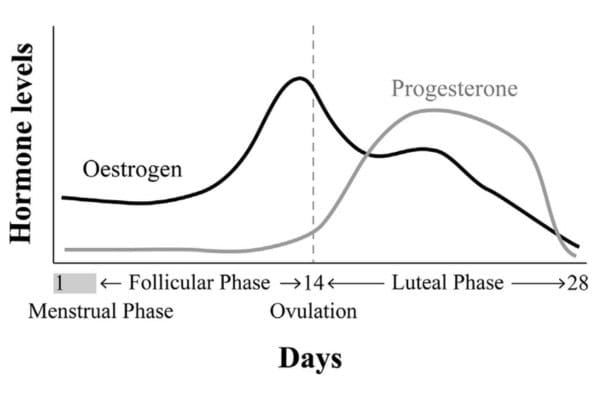
In the luteal phase of the menstrual cycle after ovulation, oestrogen levels peak and then there is a natural drop in oestrogen levels just before menstruation.
This drop in oestrogen is believed to be a key trigger for menstrual migraines.
Oestrogen also affects neurotransmitters in the brain, including serotonin, which play a crucial role in the occurrence of migraines.
Prostaglandin Increase
During menstruation, increased prostaglandin levels contribute to uterine contractions and inflammatory responses, which may exacerbate the migraine situation.
Neurovascular Changes
Hormonal fluctuations can lead to changes in cerebral blood flow and vessel reactivity.
Genetic Predisposition
There is evidence to suggest a genetic component, with certain genes influencing susceptibility to hormone-related migraine triggers.
Underlying these factors is the sensitised region of the brainstem, the trigeminocervical complex.
Current medical treatment
The current medical treatment for menstrual migraine is mainly drug therapy and can be divided into two aspects: acute treatment and preventative treatment.
Acute treatment options can involve nonsteroidal anti-inflammatories (NSAIDs) like Nurofen and simple analgesics like Panadol.
Pre-emptive use of NSAIDs has been suggested as a strategy to prevent attacks.
Triptans (eg Maxalt, Naromig, Sumitriptan) are commonly prescribed.
Triptans are most effective when taken at the beginning of symptoms, and as an aura is not usually a feature, at the beginning of headache symptoms.
Since menstrual migraines can be associated with nausea and vomiting, anti-nausea medications can be used in conjunction with pain relief to manage these symptoms.
As with all headache and migraine sufferers, women with menstrual migraine need to be cautious about their triptan and analgesic use to help prevent developing medication overuse headache.
Preventative or prophylactic treatment options are beta blockers, antidepressants, calcium channel blockers, anticonvulsants and magnesium.
In addition, there are hormonal therapies that might be employed to address the hormonal fluctuations.
Your doctor might suggest using birth control pills that have a lower dose of oestrogen.
Medications are adjusted, trialled and ruled out depending on response to treatment.

Physiotherapy role for menstrual migraine
It is commonly thought that the role of physiotherapy is limited in menstrual migraine treatment, considering that the main factor is hormonal fluctuations.
However It is important to remember the multifactorial nature all headaches and migraines. Hormonal changes may be a trigger, but there can still be underlying factors that can be addressed to reduce the likelihood of migraine.
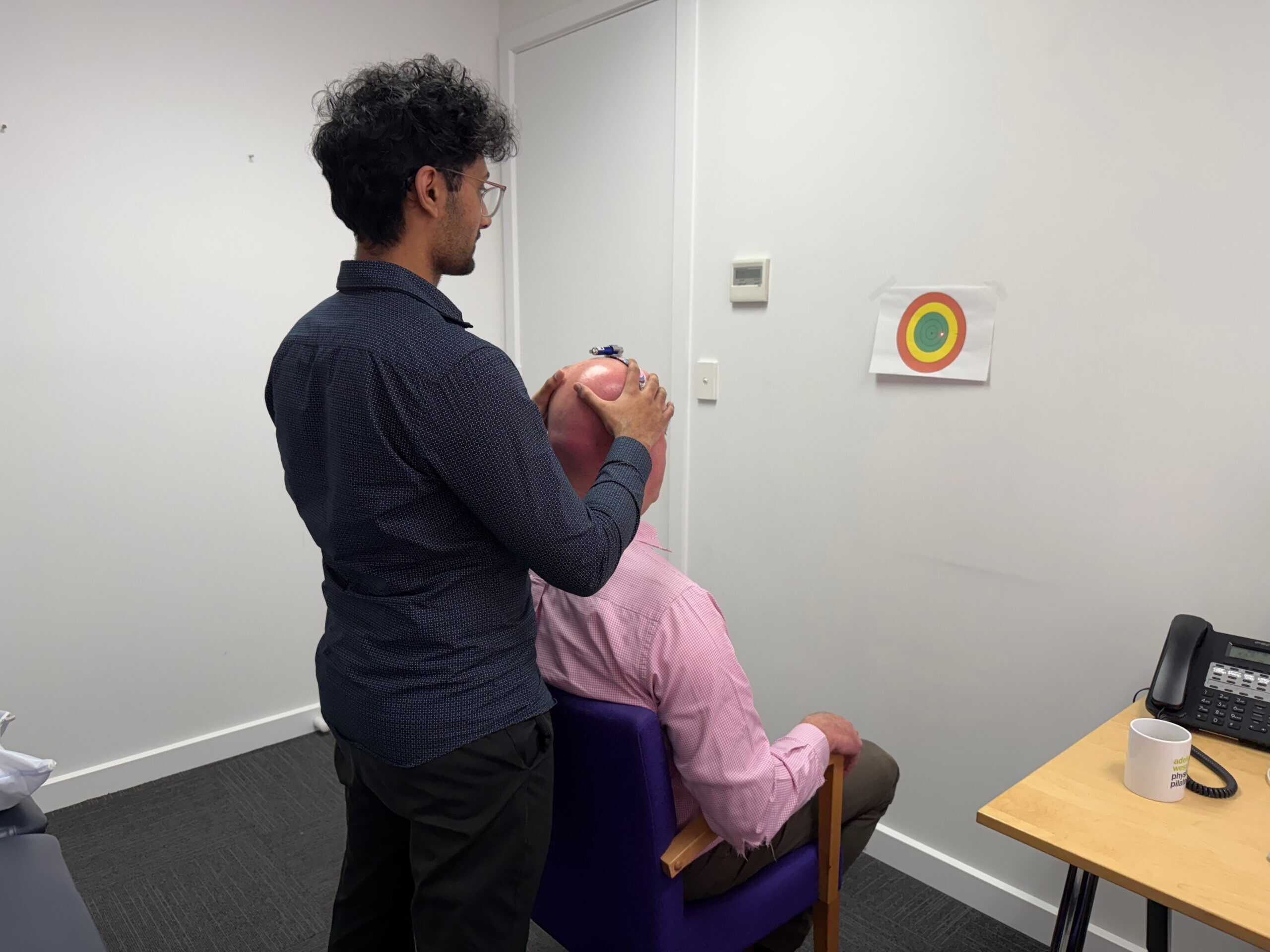
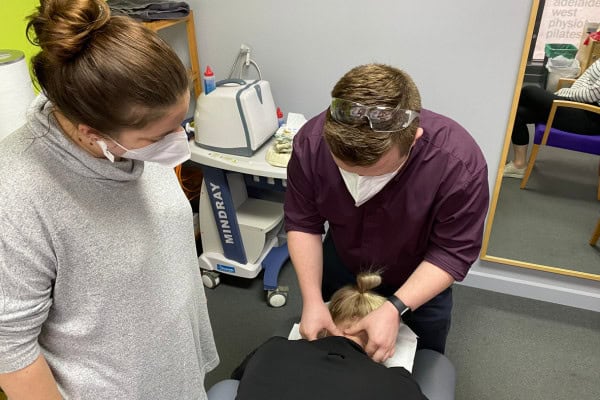
The experience of Watson Headache Practitioners is that there is a group of menstrual migraine sufferers who have typical features of upper neck of involvement with migraine.
There is a well-documented, intimate relationship between the upper neck and the relevant parts of brain anatomy involved in any migraine ie the trigeminocervical nucleus.
The upper neck is in a unique position to influence the function and sensitivity of the trigeminocervical nucleus and therefore it is able to modify its behaviour.
Our experience is that once certain upper neck features have been addressed, there is a noticeable reduction in frequency, intensity of migraine or both.
This offers another safe and non-pharmaceutical approach to helping treat menstrual migraine.
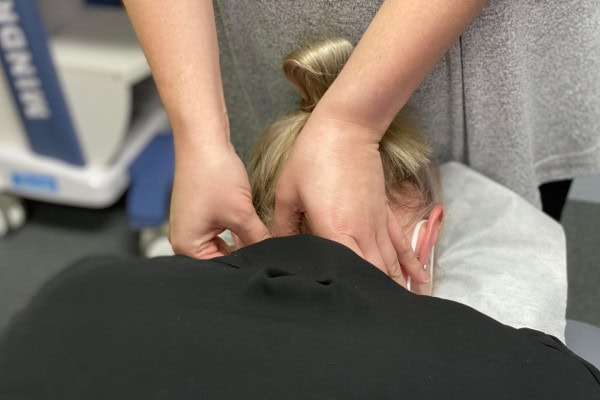
Watson Headache Approach for menstrual migraine
Starting treatment can only be justified if there are enough objective signs of problems in the upper cervical spine that correlate with the migraine or headache problem.
The treatment plan always includes the caveat that there needs to be change in the migraine presentation within 4-5 treatments to justify any ongoing treatment.
Because of the cyclical relationship, it is easier to measure how responsive this condition is to treatment as the episodes are usually predictable and regular.
Menstrual migraine sufferers are amongst the most rewarding types of patients that we treat, because it is easy to see if improvement has occurred, plus it can make such a huge difference to the person’s life.
Summary
Menstrual migraine is closely related to hormonal influences, but like all migraine and headache conditions, it is still multifactorial.
We know neuroanatomically that the upper cervical spine has an important relationship with the trigeminocervical nucleus, which is involved in all headache and migraine types.
The Watson Headache Approach provides another treatment strategy to manage menstrual migraine.
It is simple, fast and easy to tell if you would be a responder or a non-responder. The clear boundaries of the response time to the approach gives patients clarity and takes away the risk of ineffective treatment.
If you are looking for non-pharmaceutical options for managing menstrual migraines, the Watson Headache Approach is worth considering.
Looking for an alternative to medication?
HAVE A FREE CHAT WITH A WATSON HEADACHE-TRAINED PHYSIO
Book online by clicking the button below or call us on (08) 7282 0871 to organise a time.
Learn about all your options from physios understand migraines.
Interested in learning how to help your own headaches or migraines?
If you suffer from headaches or migraines, this is great information if you are keen to help yourself.
This is the same information that we provide to our private patients, everything from practical posture advice to what you need to know about your pillow.
Read this practical guide and take positive steps to help your headaches and migraines.