Migraine is a very common and disabling problem.
It is a condition that affects 1 billion people worldwide, and accounts for more disability than all other neurological orders put together.
It affects females more often than males in a 3 to 1 ratio.
Most people associate the term ‘migraine’ with intense head pain. It typically involves recurring episodes of headache and accompanying symptoms.
However, there are migraine types that have only mild head pain (or don’t have any head pain at all!), but instead involve dizziness, nausea, vomiting, abdominal pain or visual disturbances.
This article will help you to understand the different types of migraine, the way they are medically classified, the phases and common triggers for migraines.
We will also discuss the role of physiotherapy and the under-appreciated role of the upper neck.
Here is what we are going to cover with links to the sections:
What is a migraine?
Migraine is a type of primary headache disorder, meaning it is not the result of another condition.
Our current understanding is that the underlying cause is altered sensory processing in the central nervous system, in particular areas like the trigeminocervical complex in the brainstem.
Migraine is much more than a bad headache.
It is a complex neurological condition that can have a wide range of symptoms apart from head pain. These can include vision effects, strength and sensory changes, nausea and vomiting and alteration in speech and language.
There are subcategories of migraine like typical aura without headache (also called silent migraine) that don’t involve head pain.
Whether a migraine includes head pain or not, they can be extremely debilitating and can significantly impact a person’s quality of life.
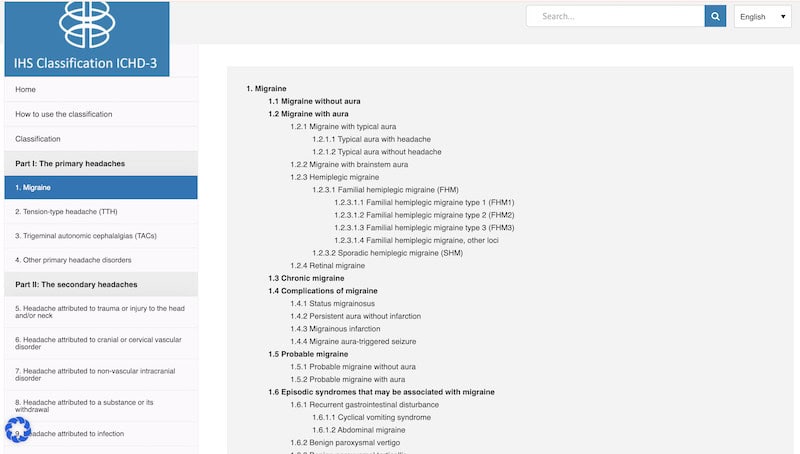
The International Classification of Headache Disorders 3rd edition
Also known as ICHD-3, this is the master document for diagnosis of different headache and migraine types. It has been developed over many years by international headache and migraine experts.
Diagnosis is based almost exclusively on symptom description, meaning quite a long and involved document that is distinguished by symptoms but not necessarily the underlying causes or pathologies which probably overlap a lot.
Its usefulness is for a neurologist to be able to label a headache or migraine disorder according to agreed standards.
Migraine with aura and migraine without aura are the two of the main types of migraine.
In addition there are 6 main categories and 22 subtypes of migraine and migraine-associated disorders listed in the ICHD-3.
Key migraine types
Migraine can be easy to distinguish from other forms of headache, but sometimes (despite the ICHD-3 classifications) the distinction can be difficult to make.
Presence of an aura is one factor that makes the diagnosis of migraine much easier.
Aura is only present in about 25% of migraine episodes. This means that 75% of migraines are ‘migraine without aura’ or some other variant of migraine.
Note: you definitely don’t have to have an aura for your headache to be classified as migraine!
Describing the main migraine types will help describe the variety of features that can be experienced.
Migraine without aura
This category used to be known as ‘common migraine’ because it is the more frequent migraine type.
The ICHD-3 describes attacks of headache lasting 4-72 hours and the following symptoms as being typical:
- Head pain located on one side
- Pulsating sensation
- Moderate to severe intensity
- Aggravated by (or avoidance of) routine physical activity eg walking or taking stairs
- Nausea or vomiting (or both)
- Photophobia (sensitivity to light) or phonophobia (sensitivity to sound)
Note that not all of these have to be experienced to fulfil the criteria of migraine.
Read more about the ICHD-3 criteria of migraine without aura (the useful notes are at the bottom of the page).
Migraine with aura
In the ICHD-3, aura in is described as:
‘recurrent attacks, lasting minutes, of unilateral fully-reversible visual, sensory or other central nervous system symptoms that usually develop gradually and are usually followed by headache and associated migraine symptoms’.
My reason for underlining ‘usually’ is that head pain isn’t necessary to qualify for migraine with aura.
Also, the head pain doesn’t need to have same migraine characteristics as the migraine without aura.
Aura most commonly occurs before the headache phase, but sometimes it can start after the headache phase or even continue into the headache phase.
The neurological symptoms of aura can include:
- Odd visual effects like squiggly lines, flashes of light or blind spots involving part or all of the visual field
- Loss of feeling or altered sensation on one side of the body, or just in an arm or a leg
- Altered strength
- Altered language or speech eg speaking gibberish right up to the complete inability to speak, or the inability to understand someone talking to you
- Dizziness or vertigo
The visual symptoms are by far the most common type of aura symptoms.
Aura are stroke-like symptoms, but fully reversible and usually don’t last for more than 60 minutes, most commonly for 20-30 minutes. However, the motor symptoms (strength changes) can last for up to 72 hours.
Being stroke-like and reversible, they need to be differentiated from transient ischaemic attacks (TIA).
There are many aura presentations like migraine with brainstem aura, hemiplegic migraine, retinal migraine that require exclusion of more serious diseases first before they can be diagnosed as migraine conditions.
This is especially true when:
- aura happens for the first time after 40 years old
- the features are ‘negative’ in nature like loss of vision, loss of sensation, loss of power
- when aura is prolonged or very short
Vestibular migraine
In vestibular migraine, head pain isn’t the main feature. Instead the main symptom is episodes of vertigo, dizziness and/or balance issues.
It is a relatively new condition to be defined, so it seems to be underdiagnosed and easily misunderstood.
The symptoms of vestibular migraine can last from minutes to hours or even days, which can really interfere with living a normal life.
Because pain isn’t a feature, it is easy to not consider a ‘migraine’ diagnosis as an option. However, vestibular migraine has been reported in up to 30% of people who visit specialist dizziness and headache clinics.
If you have dizziness and you are struggling to find answers, it is worth reading our article on vestibular migraine.
It is also worth reading more about our dizziness and vestibular physiotherapy service – we can help you navigate the different possibilities for ongoing dizziness.
It has all you need to know to begin a well-informed conversation with your doctor or physio about your dizziness and whether this condition might be involved.

Chronic migraine
In the headache world (for some strange reason), the term chronic is used differently to all other usage of the term.
Normally ‘chronic’ refers to how long a problem has been present.
With headaches and migraines, ‘chronic’ is used to describe frequency. In this context, chronic means more than 15 days of the month.
The opposite of ‘chronic’ is ‘episodic’, meaning headaches on less than 15 days per month.
The ICHD-3 definition of chronic migraine is having headaches happening on 15 or more days per month for more than 3 months, and with features of migraine headache on at least 8 days of the month.
With chronic migraine, there is often an overlay with medication overuse headache.
It is quoted in the ICHD-3 document that approximately 50% of patients with chronic migraine revert to episodic migraine after medication usage has been adjusted.
Read more about the ICHD-3 criteria for chronic migraine (the notes are at the bottom of the page).
Looking for an alternative to medication to manage your migraines?
There are some effective treatment options that can quickly reduce your medication usage!
If you are feeling unsatisfied with your current headache or migraine management but not sure about your next move, we can help.
Pick the brains of one of our headache physios!
It is the chance to bounce questions off a qualified headache physio, but without any obligation attached to it.
Call 8356 1000 to organise a FREE ‘ASK A PHYSIO’ PHONE CALL today!
Understanding migraine phases
It is important to note that in this list of phases, not all of them apply to everyone.
Some people have no prodrome, no aura or even no headache phase.
Arguably, the only phases that happen with everyone are the resolution phase when their migraine symptoms resolve, and the interictal phase between migraine.
Prodrome
Prodromal symptoms are symptoms that happen as little as hours and as long as two days before the onset of migraine.
These are quite different to aura symptoms. They can include:
- difficulty concentrating, yawning, fatigue
- cravings
- sensitivity to light or sound
- nausea or other gastrointestinal symptoms like diarrhea or constipation
- blurred vision
- neck stiffness
- altered mood eg depression or elation
Aura
Aura are the reversible stroke-like symptoms that can be experienced as part of a migraine presentation.
These are definitive of migraine ie if you have aura, you know that you are experiencing migraine.
Headache
Headache are often described as moderate to severe. In reality, it can range from no headache at all to severe.
Presence of head pain isn’t necessary for migraine diagnosis
Resolution
This is when the episode really turns the corner. It’s the ‘light at the end of the tunnel’ and the time that whatever symptoms are present start resolving.
Postdrome
Postdromal symptoms are symptoms that follow migraine. Most commonly this is described as a ‘hangover’ feeling that happens for a period of time after a migraine episode, which can last up to 48 hours.
Other symptoms can be elation or depression.
Interictal
Between migraine episodes, it has been found that there are changes that remain in the central nervous system.
These include increased excitability and reduced latency of the trigeminocervical nucleus, which results in it being more ‘excitable’ and prone to creating a migraine episode.
This might explain why some people can feel on the cusp of another episode starting.
Differential diagnoses
Other Conditions That Resemble Migraine
Migraines can present with a wide range of symptoms that overlap with other medical conditions. Here are some of the other differential diagnoses that need to be considered by your GP or specialist:
- Other primary headache disorders: tension-type headache, cluster headache, chronic paroxysmal hemicrania
- Other neurological disorders: transient ischaemic attack (TIA), stroke, cervical artery dissection, intracranial hypertension, brain tumour, chiari malformation
- Infectious and inflammatory conditions: meningitis, encephaliseis,
- Ophthalmic conditions: glaucoma, refractive errors/eye strain
- Systemic and metabolic conditions: hypertensive crisis, hypoglycaemia, thyroid disorders
A thorough list of differential diagnoses needs to be considered to rule out serious or alternative causes of headache to ensure that treatment is appropriate.
Red Flags In migraine
Because migraine symptoms can overlap with serious conditions, careful evaluation is essential. Red flags that require urgent consideration include:
- Sudden, severe headache (“thunderclap headache”)
- Progressive worsening over days or weeks
- Neurological deficits (weakness, vision loss, confusion)
- Fever, stiff neck, or altered consciousness
If there’s any doubt, brain imaging (MRI/CT) and lumbar puncture may be needed.
Common migraine triggers
Migraine sufferers can be very aware of their triggers. Others find that they can’t identify any consistent triggers.
My personal experience is that over half the patients I see have no specific triggers. Most of them wish they did so they knew what to be wary of.
Triggers can be broken into a few categories:
- Physiological triggers – hormonal changes during menstrual cycle, exercise, being overtired or having poor sleep, lack of food, prolonged postures
- Psychological/ emotional factors – stress is the most prevalent trigger quoted by patients
- Dietary triggers – Alcohol, particularly wine, cheese, lack of water, orange juice
- Environmental triggers – Bright lights, flashing lights, bright reflection off water, vehicle lights at night
Some people manage their migraine condition by avoiding triggers that they know affect them. This is often the strategy that is suggested by health professionals, and may be possible if you know what your triggers are.
However, there are triggers that can’t be avoided or that avoidance doesn’t suit the person’s lifestyle or well-being.
Would You Like To Learn Our Top 5 Tips That We Give Our Headache Patients?
This is an updated version of our popular self-help guide to help shortcut your journey to headache relief.
These 5 tips are the most impactful things you can do to help your headaches on your own.
They have been curated and updated from our experiences and the latest research in solving headache problems.
Best of all, this FREE guide gives you strategies to try immediately.
Click below to get your copy of ‘Our Top 5 Tips For Less Headaches’ and get started today!
Physiotherapy approaches for migraine management
It comes as a surprise to some people (including many doctors) that physios have a role to play in migraine management.
However, when you examine the anatomy of the upper neck and the brainstem, and the pathophysiology of headache and migraine, it makes perfect biological sense.
The trigeminocervical nucleus is the key to understanding headache and migraine, and there are key contributions from the upper cervical spine.
You can read more about the all-important trigeminocervical nucleus, and how it relates to all types of head pain, migraine and headache.
Through our training in the Watson Headache Approach and our results with patients, we recognise that there is an important contribution from the upper neck which is often overlooked with other treatment approaches and by other specialities.
The Watson Headache Approach is based on the modern understanding of migraine.
It explores the upper neck as a possible contributing factor to migraine and the central nervous system changes that occur in migraine conditions (in fact in all headache and head pain conditions).
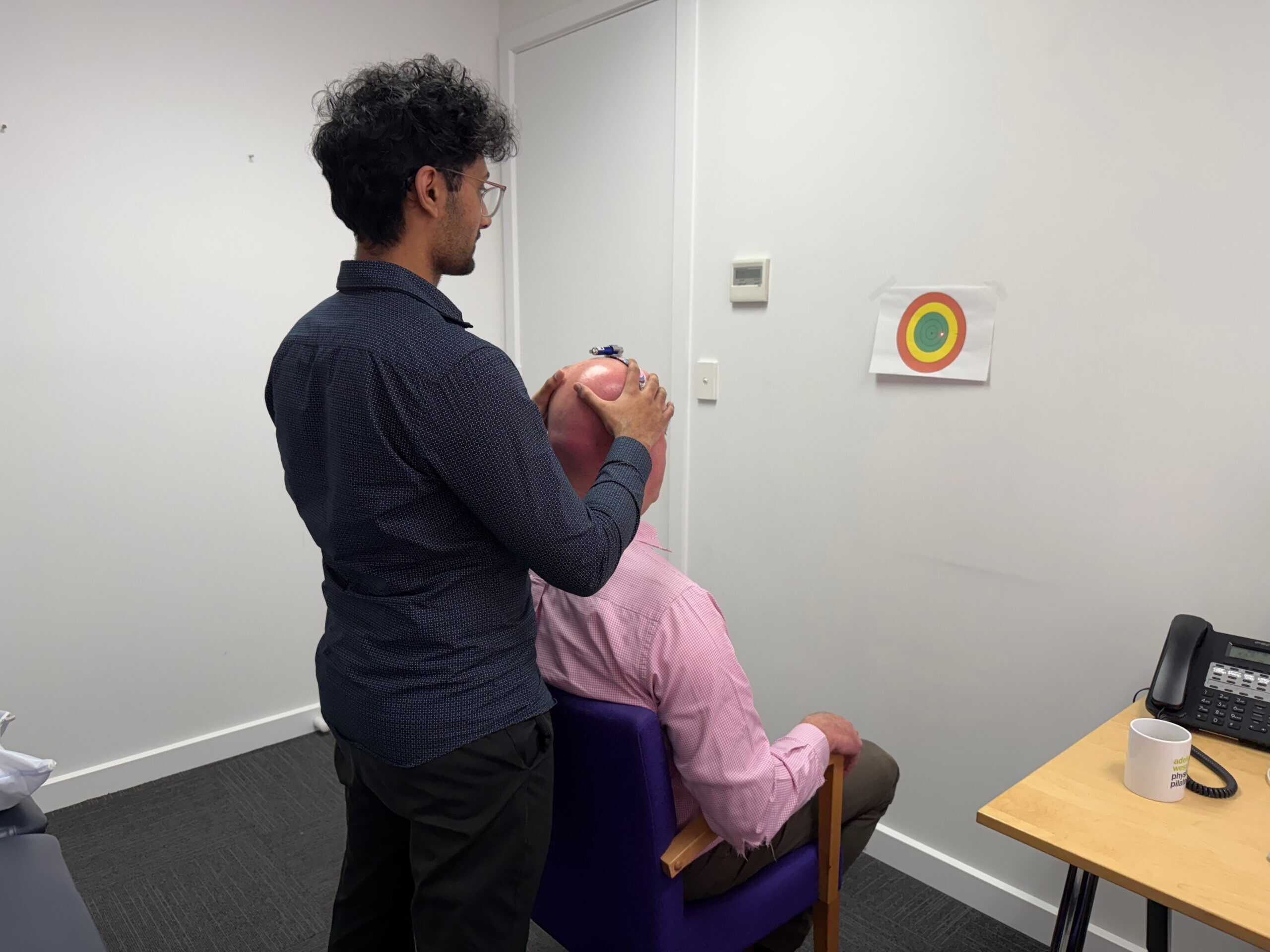
It offers an effective, pragmatic, non-pharmaceutical approach to assessing whether or not the neck is involved, and a migraine management strategy if there is found to be a contribution from the upper cervical spine.
If a cervical component is involved, treatment can be begun immediately and we expect to see a change in symptom behaviour rapidly, usually within the first few sessions.
At the same time, we address any other factors contributing to the ongoing problem that may help improve the situation, for example sleep, exercise and stress.
Click here to read more about our headache and migraine service.
A summary of the Watson Headache Approach
The Watson Headache Approach is a system that consists of:
- Safety is top priority by identifying any red flags symptoms first, and screening of upper cervical spine stability, especially in a history of trauma. There is no joint-cracking
- Thorough subjective examination to understand patterns of migraine, aura symptoms, frequency and areas affected
- Identifying baseline measures that can help track improvement or lack of improvement
- Examining the upper cervical spine for key features that occur when the upper neck is a factor in headache or migraine
- Symptom reproduction or testing to see which levels are capable of recreating similar head symptoms or other symptoms
- Symptom resolution on sustained the pressure is a strong indicator of relevance
- Positive change in a short amount of time to justify continuing treatment – improvement is usually rapid if the approach is going to help
- Establishing a self-help routine for self treatment, and an emergency management routine at the time of the onset of headache or migraine
Summary
Migraines are often mistakenly thought to mean simply a bad headache. In fact they behave in a variety of ways – some with head pain, some without. Everyone’s behaviour is a little different.
It is important for your doctor or specialist to consider other diagnoses as part of their assessment.
The main medical management involves medication, avoidance of triggers and sometimes lifestyle changes.
However, there is a well-documented but under-appreciated contribution from the upper neck that should be explored in anyone who has persistent headaches or migraines.
The Watson Headache Approach provides a system for assessing contribution from the neck and a reliable, pragmatic treatment approach that is based on evidence.
Wherever you are in your migraine journey, our Watson Headache-trained physios are here to support you in finding a solution to allow you to get back to what you enjoy.
Call us or book online to speak with one of our headache physios about how we can help!
Looking for an alternative to medication?
If you’ve tried everything and still find yourself struggling with migraines, it might be time to consider your upper neck.
A Watson Headache Certified Practitioner can provide a thorough assessment of your upper neck, offering targeted treatment that goes beyond generic solutions of medication, dry needling, lifestyle modification and massage.
HAVE A FREE PHONE CHAT WITH A WATSON HEADACHE-TRAINED PHYSIO
Book online by clicking the button below or call us on on 8356 1000 to organise a time.
It’s a no-pressure way to see if the Watson Headache Approach could be the key to your migraine relief.
Frequently-Asked Questions
What is the difference between migraine and headache?
There are headache disorders that are not migrainous and migraines that don’t involve headaches.
Headache is a phase of migraine.
Migraine is a complex neurological condition that may involve headache, but doesn’t necessarily. There are a variety of other symptoms that can happen with a migraine.
What is an aura?
Aura is a series of reversible neurological symptoms that can happen as part of a migraine episode.
The possible symptoms include visual changes, feeling changes including tingling or loss of feeling, loss of strength, problems with speech or language, dizziness or vertigo.
You can read more in the section about migraine with aura.
Does weather affect migraines?
There is a group of migraine sufferers who most definitely can find that certain weather types are a trigger, or changes of weather.
The mechanism for this is unclear.
Who suffers more, men or women?
The rate of migraine in women is higher than men in a ratio of 3 to one, so in that sense, more women suffer with migraines.
Why doesn't migraine show on MRI, and why have an MRI?
MRI scans are great at showing structure, so if there is a structural problem with the anatomy inside your head, like a space-occupying lesion (eg a tumour) or an aneurysm, they can pick them up.
However, what MRIs can’t do is show neurochemical changes, synaptic transmission, nerve tissue excitability ie small scale neurophysiology. Migraine is about the neurophysiology that happens.
The value of MRI is excluding any of the other possible reasons for migraine, because there are many neurological problems that need to be excluded, as mentioned above in the differential diagnosis section.