
Let us help you find your footing.
No GP referral is required
Prefer to talk first? Call 8356 1000
Walking down a supermarket aisle, driving, or even rolling over in bed can suddenly trigger a familiar wave of dizziness.
You might have seen your GP, an ENT, or tried medication, but the spinning or foggy feeling just won’t ease up.
And it can be really frustrating – it chips away at your confidence and quality of life.
You don’t have to just “live with it” or keep avoiding the things that make you dizzy.
At our Fulham clinic in Adelaide’s western suburbs, our physios with training in dizziness and balance conditions assess how your inner ear, eyes, neck and brain are working together, and guide you with a plan that suits your situation.
First, we work out what’s going on.
Dizziness can have different causes, so assessment comes first.
From there, we explain what we find, talk through whether vestibular physiotherapy is appropriate, and guide you through the next steps.
Prefer to talk first?
Call 8356 1000 for a no-obligation chat.
This service may be suitable if your symptoms sound like one of the examples below.
Spinning, light-headedness, wooziness, or feeling like the room is moving.
Brief bursts of vertigo triggered by rolling in bed, looking up, bending forward, or changing head position.
Feeling unsteady, veering, needing to hold walls or rails, or losing confidence on uneven ground
Feeling worse with head movement, busy visual environments, scrolling, driving, supermarkets, or quick position changes.
Dizziness that seems linked with neck pain, stiffness, headache, whiplash, or certain neck movements.
Dizziness, balance issues, motion sensitivity, or visual symptoms after a fall, sporting collision, or head injury.
Dizziness, motion sensitivity, migraine symptoms, or sensitivity to light, sound, or movement.
Symptoms that have not settled after a virus, inner-ear episode or other cause.
Dizziness can have different causes, so the first step is working out what may be contributing to your symptoms and whether physiotherapy is the right place to start.
If your symptoms followed a head injury, learn more about our concussion physiotherapy service.
Most dizziness is not dangerous, but some symptoms should be checked urgently.
Seek urgent medical care if your dizziness is sudden, severe, very different from normal, follows a head injury, or comes with weakness, facial drooping, trouble speaking, chest pain, fainting, a new severe headache, double vision, or difficulty walking.
Dizziness can have different causes. If it sounds like your symptoms need medical care rather than physiotherapy, we will let you know and guide you in the right direction.
Your balance system involves your inner ear, eyes, neck and brain all working together.
If those signals don’t match, you can feel dizzy, light-headed or unsteady.
The dizziness treatment we provide at our Adelaide clinic starts with listening to your symptoms and assessing the parts of your balance system that may be involved.

Common causes of dizziness we assess and treat:
Vestibular rehabilitation can help:
The job of a vestibular physio is to help pinpoint what’s going on and which treatment approach is right for you.
Short-term dizziness can happen with things like an ear infection.
But if it keeps coming back, or it lasts for weeks, it’s worth getting it checked out.
Ongoing dizziness can lead you to avoid movement, which can sometimes make things worse.
So we start with working out what’s going on.
From there, we match your management plan to what seems to be contributing to your symptoms.
Book a free no-obligation chat with a physio to talk through your situation.
Or call 8356 1000.

Dizziness has different causes, so there’s no one-size-fits-all approach.
We work out what’s driving your symptoms and choose the treatment that fits – whether that’s vestibular rehabilitation, BPPV repositioning manoeuvres, neck treatment, balance exercises, or a combination.
We listen to your symptoms and check how your balance, eyes, inner ear and neck are working together.
This helps us understand what’s contributing to your dizziness.
Your physio will explain what we find and outline the next steps.
This may include vestibular rehab, BPPV treatment, neck-related care, balance retraining or a mix of approaches.
As you work through your plan, we review and adjust things as needed so you can build confidence step by step.
We start by listening.
You’ll have time to describe what you feel, when it happens, and what you’ve already tried.
We explain each test before starting, and you can pause or stop if your symptoms become too uncomfortable.
Then your physiotherapist will go through an assessment process to find out which parts of the balance system are contributing.
You’ll leave with:
a clearer understanding of what may be contributing to your dizziness
a practical plan for the next steps
guidance about whether physiotherapy is appropriate for your situation
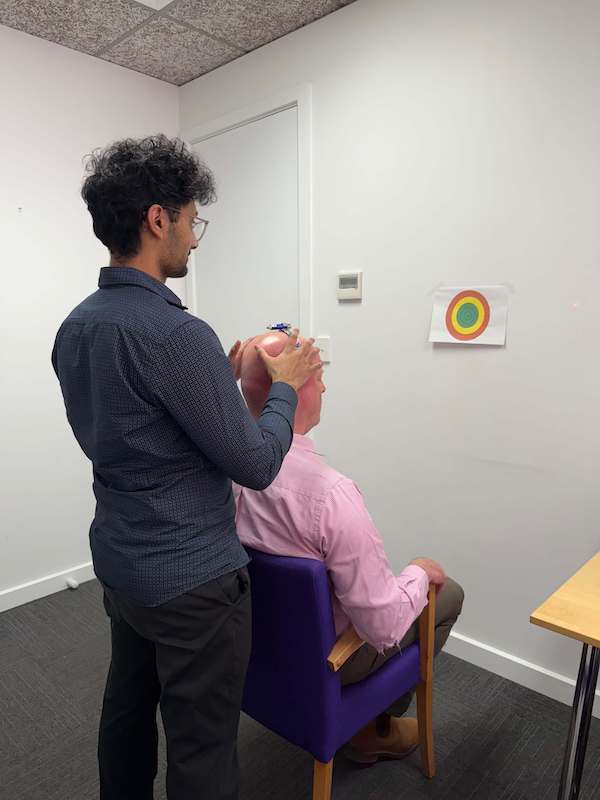
Aniket is one of our physiotherapists with a special interest in vestibular rehabilitation and balance disorders.
He’s known for his calm, thorough approach and his knack for explaining tricky concepts in simple, reassuring ways.
His focus is helping you understand what is happening and build confidence with movement at a pace that suits you.

It’s easy to feel alone when dizziness keeps popping up – but you’re not.
With the right assessment and plan, many people find they can start moving with more confidence again.
We help people with dizziness, vertigo and balance problems from across Adelaide’s western suburbs, including Henley Beach, Fulham, Grange, West Lakes, Lockleys and surrounding areas.
If dizziness has been getting in the way, let’s talk about how we might be able to help.
Call us on 8356 1000 and we can talk it through
It’s natural to have questions – especially if dizziness has been confusing or unpredictable. Here are some answers to the things people often wonder before they start.
Yes – in many cases, it can. Physiotherapists with extra training in vestibular rehabilitation work with the balance system in your inner ear, eyes, and brain.
For some dizziness presentations, targeted exercises and movement strategies can be useful as part of a vestibular rehabilitation plan.
We’ll always explain what’s appropriate for your specific situation.
It can. With cervicogenic dizziness, if the dizziness is associated with head movement, neck restriction or neck pain, it is something that needs to be considered.
Aniket can assess whether your neck may be contributing to your symptoms by specific questions and a skilled examination.
We’ll start by listening to your story and understanding your symptoms. Then we’ll do gentle tests that might include tracking your eye or head movements, checking balance, and seeing what triggers your symptoms.
You’ll get a clear explanation before anything is done – no surprises, and you can stop at any point.
Yes. Both concussion and vestibular migraine can affect how your balance system processes movement, leading to dizziness, fogginess or motion sensitivity.
Vestibular rehabilitation focuses on retraining those pathways.
Your physiotherapist will tailor the approach to your symptoms and how sensitive your system is on the day.
No referral is needed. Many people come to us directly, while others are referred by their GP, ENT or neurologist.
We’re also happy to work with your other healthcare providers if you already have them involved.
It can be. When your balance and visual system are relearning how to work together, it’s common to feel tired, foggy or a bit off afterwards – especially early on.
This usually settles as your system adapts. We design your program so the exercises are challenging enough to help, but still manageable for you.
Some exercises may briefly bring on your symptoms – that’s often part of helping your system relearn what to do.
But everything is done gently, at your pace, and you can stop at any time.
We adjust the exercises based on how you feel so they stay safe and achievable.
You can contact us even if physiotherapy hasn’t been suggested.
We’ll ask about your symptoms and any investigations you’ve already had, then discuss whether a vestibular physiotherapy assessment appears appropriate.
If your symptoms need medical investigation instead, we’ll explain that.
It varies from person to person. Some people notice changes quickly, while others improve more gradually depending on the cause of their symptoms and how sensitive their system is.
Your physiotherapist will review your progress regularly and adjust your plan as you go.
If you would like to read more about different dizziness causes, here are a few articles that we have written that might help:
Neck pain, stiffness, headache or whiplash history can sometimes be relevant in dizziness presentations.
A broader guide to common causes of dizziness, when to seek help, and how physiotherapy assessment may guide treatment.
Vestibular migraine can involve dizziness, motion sensitivity, head pressure, light or sound sensitivity, with or without a typical headache.
If you are looking for BPPV assessment or treatment in Adelaide, this guide explains what to look for and when physiotherapy may be appropriate.
PPPD is a type of ongoing dizziness or unsteadiness that can be triggered by movement, busy environments or being upright for too long.