Medication Overuse Headache is a condition that every headache or migraine sufferer needs to understand … so they can avoid it.
The regular use or over-reliance on medication which is intended to help with headaches or migraine can make the situation worse.
A lot worse.
If you suffer from chronic headaches or you know someone who does, this article about medication overuse headache is very important to read and share.
Take home messages
- If you are using any acute headache medications more than 2-3 times per week, you are at risk of developing medication overuse headache
- Medication Overuse Headache can involve any of the headache relief medications
- It is easier to prevent this condition from developing than it is to treat it.
- Explore underlying causes for your headaches or migraines to avoid this condition – the upper neck should be assessed by a skilled practitioner to rule it in or rule it out as a cause
What is Medication Overuse Headache?
Medication-Overuse Headache (MOH) is a chronic headache type that is related to the frequent and regular use or overuse of acute medications to relieve headaches or migraines.
The type of medication can range from over the counter analgesia (Paracetamol, Ibuprofen etc.) to prescription medications (opioids, triptans).
MOH is classified as a secondary headache by the ICHD-3 (International Classification of Headache Disorders third edition).
The ICHD-3 describe someone starting with a primary headache eg tension type headache or migraine, but developing a new headache pain or a having a worsening of the pre-existing headache due to frequency of medication use.
It is responsible for most of recurrent daily headaches and the majority of referrals to headache specialists.
Medication-overuse headache used to be known as rebound headache, withdrawal headache (because it was thought to simply be related to withdrawal symptoms), analgesic rebound headache, medication misuse headache or drug-induced headache.
It is unfortunate that the term can imply that the patient has done something wrong, or have brought it on themselves.
New names like Medication Adaption Headache are being proposed to remove the possible implications of the condition’s name.
Medications might be used pre-emptively for fear of getting a migraine or headache.
A typical Medication Overuse Headache experience
The typical picture is of someone that has had their headaches diagnosed as a primary headache disorder, like tension-type headaches, cluster headaches or migraine.
They have used medication with increased frequency over time to try to get the same effect.
Medications might be used pre-emptively for fear of getting a migraine or headache.
The headaches are quite frequent, if not daily, and are often worse in the morning or shortly after waking up. Symptoms may include nausea, sensitivity to light and sound and difficulty concentrating.
Investigations will typically be normal.
Unsure about how to get relief for your headache or migraine problem?
Talk it through with a fully qualified Watson Headache-trained physio FREE OF CHARGE.
Get some advice about what your next move should be, and if our services would be suitable for you.
Call (08) 7282 0871 to organise a FREE PHYSIO PHONE CALL
The diagnostic criteria for Medication Overuse Headache classification
These are the criteria from the International Classification of Headache Disorders (ICHD-3) that were developed by the International Headache Society:
- Headache occurring on 15 days per month or more in a patient with a pre-existing headache disorder
- Regular overuse for at least 3 months of one or more drugs that can be taken for acute and/or symptomatic treatment of headache
- Not better accounted for by another ICHD-3 diagnosis
They don’t specify which medications or the frequency, but we will flesh that out below.
Which medications can cause Medication Overuse Headache?
The medications aren’t only the obvious ones like opiates. It can also be caused by:
- simple analgesia (eg paracetamol)
- anti-inflammatories (eg Nurofen)
- triptans (eg Imigran, Zomig, Naramig, Maxalt, Relpax)
- combination analgesia (eg Panadeine, Panadeine Forte, Mersyndol)
- caffeine-containing medications (eg Panadol Extra)
As you will see, different medications have different risk of developing this type of headache.
How much medication is too much?
According to Headache Australia, ‘too often’ is using these medications more than 2-3 days per week. This level of usage is quite common in the chronic headache and chronic migraine population.
For over the counter medications like paracetamol or ibuprofen, you are considered at risk if they are used more than 15 days per month. If you use these medications more than half the days of the week, you are considered at risk.
You are at higher risk with prescription medication like triptans, with the frequency dropping to 10 days per month, or approximately 2 days per week.
If the medication involves caffeine, eg Panadol Extra, you are at risk if your usage is 10 days per month.
Often patients know they are taking too much medication, but they don’t know that it can make their headaches worse.
It is up to health professionals to understand the risk of MOH and to help educate our patients to avoid this situation.
Often patients know they are taking too much medication, but they don't know that it can make their headaches worse.
Take home messages
- hormonal influences are a common trigger for migraines
- menstrual migraine is a defined subgroup of people who have migraines triggered by their menstrual cycle
- the medical management for mainly is pharmaceutical, either managing the acute attack or preventative
- there is a group of sufferers who can be helped enormously by the Watson Headache Approach which is safe and non-pharmacuetical
Why does Medication Overuse Headache happen?
The exact pathophysiology of medication overuse headache is still not fully understood.
It is believed that the regular use of certain pain medications can lead to changes in the brain’s sensory processing pathways, resulting in a cycle of increasing headache frequency and intensity.
The exact mechanisms underlying MOH involve a combination of neurobiological, psychological, and behavioral factors.
Chronic use of medications such as analgesics, triptans, and opioids can alter pain perception and lead to sensitisation, contributing to the development and maintenance of this type of headache disorder (Ashina & Dodick, 2021).
A simple summary would be that the experience of head pain becomes evident more easily as a result of different pathways and brain areas becoming more sensitive in headache patients.
Treatment of Medication Overuse Headache
It is easier to prevent this condition from developing than it is to treat it.
If you are using any acute medications more than 1-2 times per week, you are at risk and need to take action.
It is easy to see how someone who suffered from regular headaches or migraines could travel down this road of using analgesia or anti-inflammatories or triptans more regularly. In fact, we see people every day who are at risk of going down this road and are trying to address their problem to reduce their medication use.
A skilled examination of the upper neck can help you work if your neck has a role in your headaches or migraines, and treating the underlying contribution and reduce the need for medication in the first place.
Prevention is the key to medication overuse headache
Medical treatment
The first step in treatment is recognising that you have this pattern of headaches, and getting some advice. Speak with your GP and mention the term ‘Medication Overuse Headache’.
While there is no consensus on the best medical treatment, expert opinion is that it needs to involve interrupting the overuse pattern by suspension of the overused medication.
Even stopping simple analgesics like paracetamol can provide a significant decrease in headache frequency and severity.
This should be always be discussed and done with the guidance of your GP. Certain medications need to be reduced progressively, like opiates.
In some cases, patients with medication overuse headache need ‘bridging therapy’ like steriod or anti-emetics to manage withdrawal symptoms like headache, nausea and vomiting (Ashina et al., 2023).
A really important factor is educating patients on the biology of headache and the idea of central sensitisation (the process where your sensitivity ‘setting’ changes and the experience of pain is more easily produced).
Education about the correct use of abortive medications like triptans is also important.
Challenges to treatment
There are several challenges to effectively managing this condition. Some of the key challenges include:
- Underdiagnosis: this is a condition that is underdiagnosed due to a lack of awareness from both patients and healthcare providers.
- Relapse: Even after successfully stopping the offending medications, patients with MOH are at risk of relapse. This needs to be pre-empted and planned for in order to avoid it.
- Limited Treatment Options: Not all patients respond well to the standard medical approach. There is still a need for further research and treatment strategies for the non-responders.
The role of physiotherapy in medication overuse headache
It would be easy to think that the management of medication overuse headache patients is solely in the domain of medicine.
However, the headache physio has a number of important roles:
- Diagnosis and treatment of any underlying reason for headaches or migraines that is within our sphere of influence, to avoid the development of MOH
- To recognise the signs of someone who is at risk of developing MOH due to their medication usage and providing preventive treatment in the form of referral to their GP
- To diagnose someone who likely has MOH, and make the appropriate referral back to their GP to avoid delay in getting effective treatment
- To assist during the withdrawal process, to help reduce sensitivity in a sensitised brainstem and the original primary headache, whether migraine or tension-type headache
- To suggest lifestyle changes, such as managing stress levels, improving sleep hygiene, maintaining a regular sleep schedule, and adopting relaxation techniques, to prevent headache recurrence
- To educate about the process of medication overuse and the correct usage of medications
Treatment of a headache or migraine can be done more effectively before someone develops MOH, so the earlier that it can be addressed, the better.
If there is a legitimate contribution from someone’s upper cervical spine (upper neck), reducing the impact can prevent the need for regular medication in the first place.
How a Watson Headache-trained physio can help
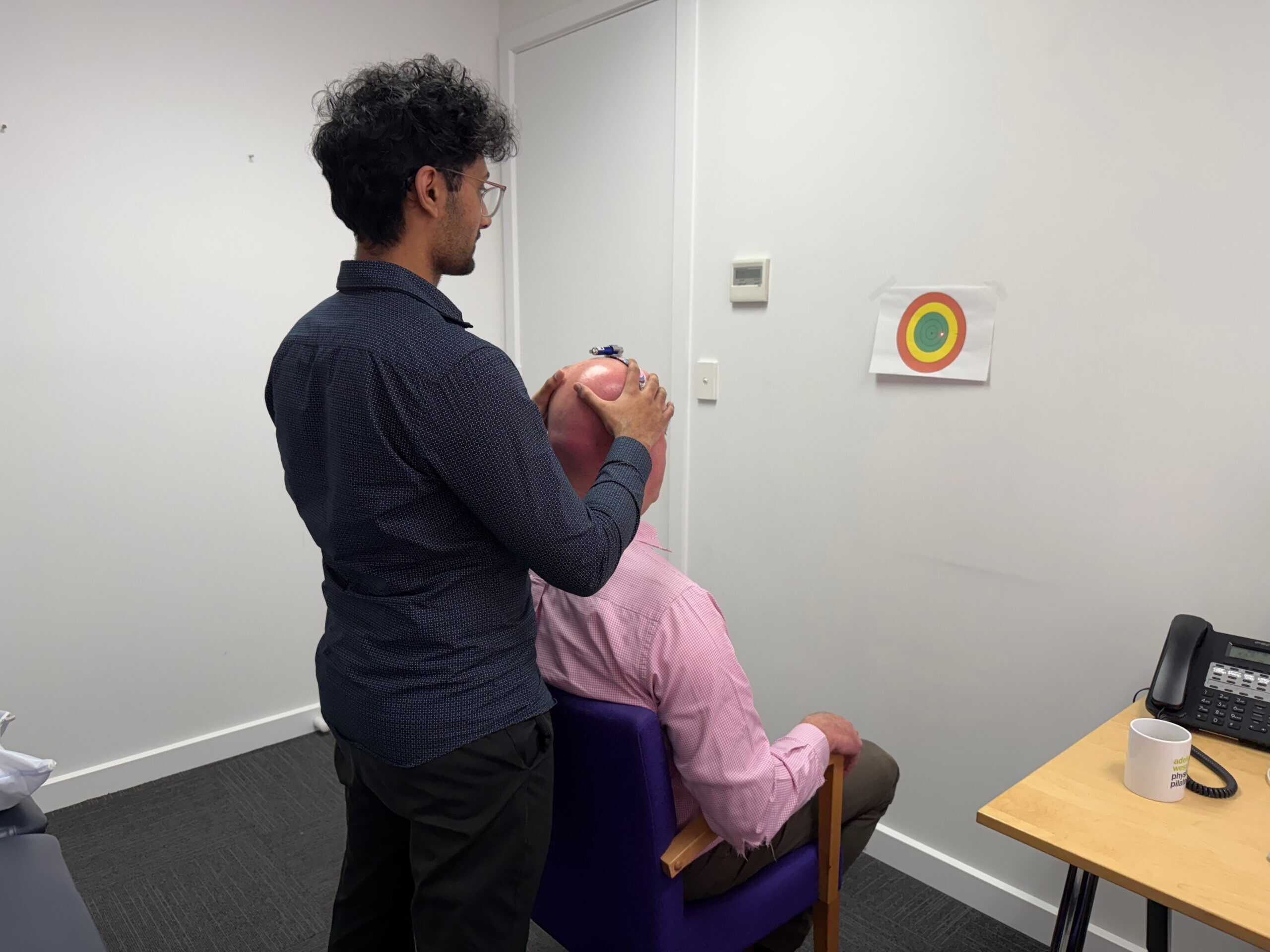
To determine if the neck has a role to play in the headache or migraine situation, a skilled examination of the upper cervical spine needs to be performed.
A general practitioner or a neurologist isn’t trained to do this level of examination.
A Watson Headache-trained physio is skilled in assessing for any relevant contribution from the upper neck, treating it and therefore preventing the course of medication-overuse headache.
The Watson Headache Approach does not involve cervical manipulation or ‘cracking’.
Following examination, treatment can only be justified if there is enough evidence in the upper cervical spine that correlates with the migraine or headache problem.
Furthermore, there need to be definite reduction in headache symptoms within 4-5 treatments to justify any ongoing treatment.
This approach tends to make patients happy because there is a clear plan and it takes away the risk of ineffective treatment.
Using a structured assessment protocol, it is possible to screen for any serious causes for the headaches/migraines that are non-neck related or need medical attention.
Summary
Medication Overuse Headache is easier to avoid than it is to treat.
It is a situation where the treatment that is designed to help creates a new and more persistent condition which may be more challenging to treat than the original problem.
Physios and other health professionals have a duty to understand Medication Overuse Headache and to educate patients on its development, and make referral to their GP for assistance if they are at risk.
Identifying legitimate causes or contributing factors to a headache or migraine problem are the key to avoiding Medication Overuse Headache.
A Watson Headache-trained physio can help determine if there is an underlying upper neck contribution that is fuelling the headache or migraine condition and treat it non-pharmaceutically, thereby avoiding the scourge of Medication Overuse Headache.
Unsure about how to get relief for your headache or migraine problem?
Talk it through with a fully qualified Watson Headache-trained physio FREE OF CHARGE.
Get some advice about what your next move should be, and if our services would be suitable for you.
Call (08) 7282 0871 to organise a FREE PHYSIO PHONE CALL
Frequently-Asked Questions
Can daily headaches be harmless?
Yes, they can. However, you need to consult your GP or headache physio.
There are many reasons for daily headache, some are benign and some are not.
You could argue that medication overuse headaches are harmless, but they make a signficant impact on people’s life, productivity and social interactions.
What to do if medication causes headaches?
Your first move is always to consult your GP. Headaches are a potential side effect of many medications and should always be discussed with your GP to find the best way to manage it.
Should I be worried if I have headaches every day?
There are many potential reasons for daily headaches. Medication overuse headache is just one of these.
If you have daily headaches, the cause needs to be determined in order to manage it effectively. Don’t assume that it is normal. Consult your GP or headache physio.