Tension headache is the common term for what is known medically as tension-type headache (TTH).
While they can be mild and successful self-managed, they can also be severe, very difficult to manage and a huge impediment to normal daily function.
Tension-type headaches are often incorrectly referred to as ‘stress headaches’.
Unfortunately the tension-type headache sufferer can feel blamed if the solution that is provided is the advice ‘you need to deal better with your stress‘.
While stress is undeniably a common trigger, there is much more underlying tension-type headaches.
In this comprehensive guide, we’ll describe both the traditional version of tension headaches then the modern, updated understanding of what is happening in your body.
Lastly, we’ll discuss how we help people with tension-type headaches at our clinic, the framework that we use that takes away the guesswork, and how to prevent them from controlling your life.
Take home messages
- tension headaches are not simply ‘stress headaches’
- many factors can contribute, but the upper neck is underestimated
- sensitisation of the brainstem is the key component
- diagnosis is usually made by symptom-reporting, there are no investigations that help to diagnose it,
- the Watson Headache Approach is the only system that assesses the contribution of the upper neck to this sensitisation process
What are tension headaches?
Tension-type headaches are the most common form of headache.
Studies suggest a lifetime prevalence as high as 78% in the general population, meaning there’s a good chance you’ll experience one of these in your lifetime.
With tension headaches, people describe things like:
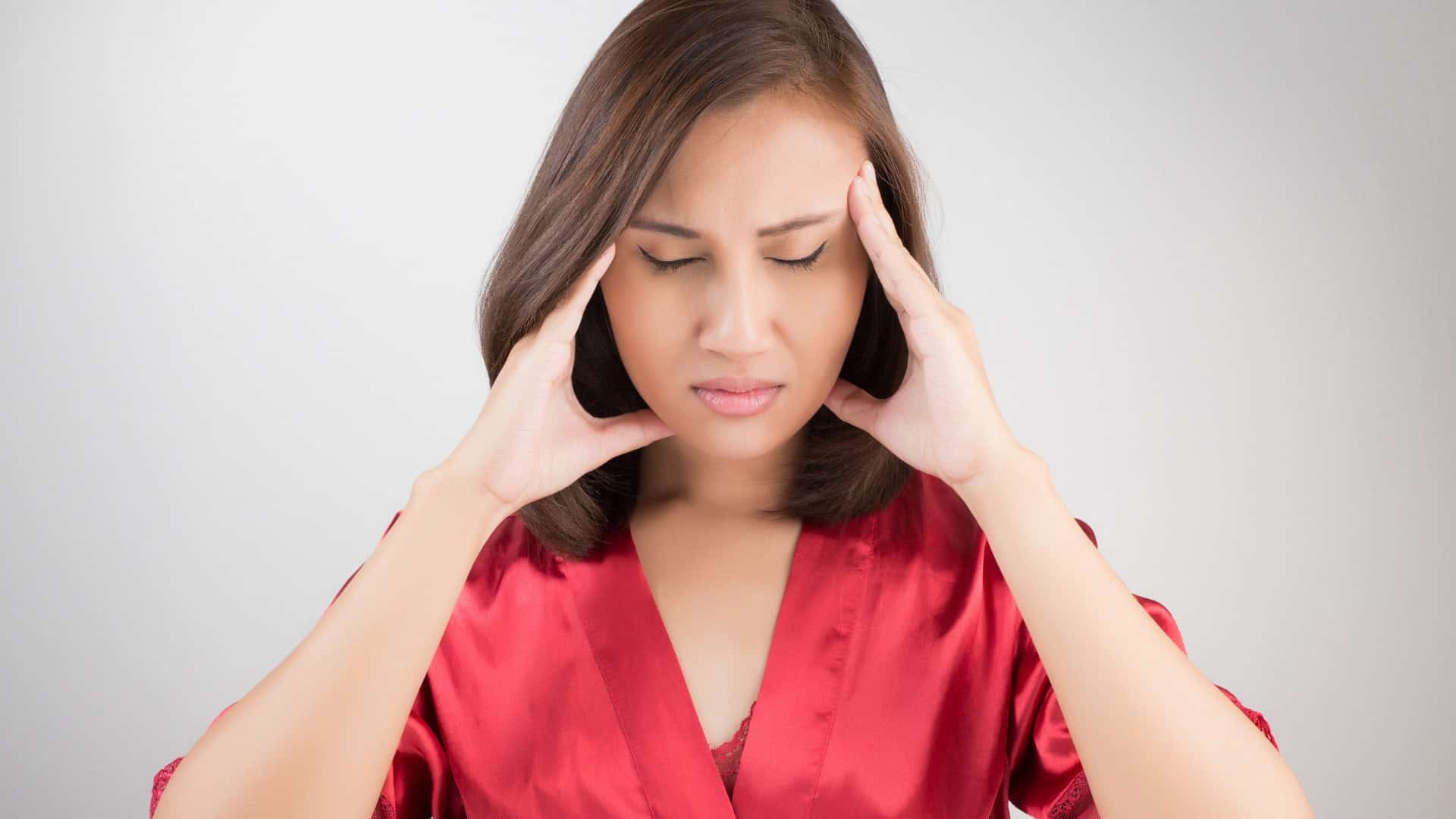
- tension, tightness or pressure around the forehead, eyes, and both sides of the head
- the feeling like a cap that is on too tight
- a dull, aching pain or pressure
The intensity is typically described as mild to moderate. However, some people have strong headaches that can be as disruptive to life as any migraine.
Tension-type headache can be divided into these two categories, according to frequency:
- Episodic Tension Headaches: Occur fewer than 15 days per month, perhaps related to factors like stress or fatigue.
- Chronic Tension Headaches: Occur more than 15 days per month for at least three months, significantly impacting quality of life.
NB: in the headache and migraine world, the term ‘chronic’ is used to describe frequency (ie more than 15 days per month) as opposed to how long the symptoms have been happening, like every other use of the term.
According to the International Classification of Headache Disorders 3rd edition (ICHD-3), tension-type headache is classified as a ‘primary headache’.
This simply means that the headache itself is the main problem, as opposed to a ‘secondary headache’ when the headache is the result of another issue.
Other examples of primary headaches are migraines and cluster headaches.
The labelling of tension-type headaches
In the past, the naming has come from the assumption that they were of psychological origin, earning titles like ‘psychogenic’ or ‘psychomyogenic’ headache.
‘Stress headache’, a term still in common use, continues this tradition of blaming psychological causes.
In the past, experts thought tension-type headaches were caused by muscle contractions in the face, neck and scalp. This lead to labels like ‘muscle contraction headache’.
The term ‘tension headache’ can have different meanings to different people. Although it is meant to describe the sensation of ‘head tension’, it is often interpreted to be another term for stress.
This may explain the renaming of these from ‘tension headache’ to ‘tension-type headache’.
What causes tension-type headaches?
The cause of tension-type headaches is not fully understood.
Like any health condition, tension-type headaches are a complex interplay of biological, psychological and social factors.
While is was thought to be related to increased muscle tension of scalp and neck muscles, research into muscle activity in tension-type headache sufferers shows that the activity of these muscles is not significantly different during headache episodes compared to when the subjects are headache-free.
Instead, the recent research has shown that the underlying problem in tension-type headache is an extra-sensitive pain system.
When the pain system is sensitised or more ‘pro-nociceptive’, even non-noxious (not threatening) signals are amplified and more likely to be interpreted as dangerous. This means they are more likely to create a pain experience.
Any kind of input can be potentially interpreted as ‘threatening’ by a sensitised system:
- stress
- missing a meal
- postural stressors
- sleep disturbance
- dehydration
- eye strain
- normal hormonal changes
All of the factors listed above can be involved individually or in combination, acting on a sensitised pain production system to provoke headache.
Looking for an alternative to medication to manage your tension-type headaches?
There are some effective treatment options that can quickly reduce your medication usage!
If you are feeling unsatisfied with your current headache or migraine management but not sure about your next move, we can help …
Pick the brains of one of our headache physios!
It is the chance to bounce questions off a qualified headache physio, but without any obligation attached to it.
Call 8356 1000 to organise a ‘ASK A PHYSIO’ PHONE CALL today!
The missing link: a sensitised brainstem
Interestingly, the neurological features of tension-type headache aren’t dissimilar to those of migraine. This might help to explain the difficulty in differentiating between chronic tension-type headache and migraine without aura.
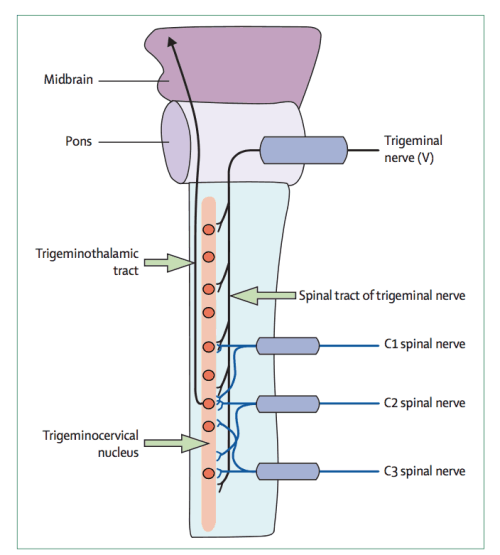
Specifically, the trigeminocervical nucleus in the lower brainstem is sensitised. It has a reduced threshold, becoming more excitable, and less fatigeable.
The result is an exaggeration of any signaling from the face, head, and neck.
The upper neck is a well-documented ‘input’ of information to the trigeminocervical nucleus. This means that messaging from the upper neck can be an important contributor in this sensitisation process, or in maintaining sensitivity.
It also means that the upper cervical spine lends itself to be used to reduce this trigeminocervical sensitisation. Judicious treatment can also help upper cervical spine mobility and reduce ‘abnormal signals’.
This is the basis of the Watson Headache Approach.
Read more about the trigeminocervical nucleus.
Medical management
Medical Diagnosis
Medical diagnosis is based on the subjective examination, that is, questioning about medical history and symptoms.
Scalp tenderness is a common finding in tension-type headache, but can be found in all headache types. This used to be interpreted as a consequence of muscle contraction.
Now, research points to this being a sign of an extra-sensitive pain system in tension-type headaches.
In most cases, extensive testing isn’t required, though imaging and blood tests may be used to exclude other pathologies.
There is no physical testing that differentiates between tension-type headache and another kind of primary headache, or most of the secondary headaches.
The International Classification of Headache Disorders (ICHD-3) criteria for tension-type headache vary slightly between episodic and chronic tension-type headache, but broadly are they headaches that
- Usually last between 30 minutes to 7 days
- Involve a bilateral location, pressing or tightening
- Have a mild or moderate intensity
- Are not aggravated by routine physical activity
- Don’t involve vomiting, photophobia or phonophobia
Saying this, episodic frequent tension-type headache can involve photophobia (sensitivity to light) and phonophobia (sensitivity to sound), and chronic tension-type headache can involve nausea.
Standard Treatment
The conventional approach to treating tension headaches is directed at symptoms rather than the underlying processes.
A lot of these treatment approaches are based on the thinking of tension-type headache being simply as a muscle tension problem.
These include:
- Medication: Over-the-counter pain relief like paracetamol and ibuprofen can help, but chronic sufferers may need prescription medications such as antidepressants or muscle relaxants. The usage of medication, even over-the-counter medication, needs to be monitored, and the patient needs to be educated about the risk of Medication Overuse Headache.
- Non-Medical Treatments: Massage, acupuncture, psychology and stress management can help, but these can be somewhat helpful with any headache presentation
- Lifestyle Adjustments: Improving sleep, staying hydrated, exercising, and making ergonomic changes can all contribute to reducing the frequency of headaches.
For some people, this approach is effective, but certainly not for everyone. Perhaps it shouldn’t be surprising that these treatment strategies don’t always work, as they are directed at symptoms rather than the underlying sensitivity ‘setting’.
Not only that, treatments can be employed based on ‘intuition’ and what should work given the assumption that it is a stress-based or scalp tension problem.
For example, the Stanford Medicine website says: ‘certainly from an intuitive viewpoint, it makes sense that biofeedback would benefit certain headache sufferers.’
It is surprising to hear something like this from an establishment of such high authority, when the processes underlying tension-type headache are better understood than that.
WOULD YOU LIKE TO LEARN OUR TOP 5 TIPS THAT WE GIVE OUR PATIENTS?
This is an updated version of our popular self-help guide to help shortcut your journey to find solutions that work.
These 5 tips are the most impactful things you can do to help improve your headaches on your own.
These tips are curated by our physios and renewed by our experiences and the latest understandings of headache problems.
Each of the tips has a link to allow you to dive deeper into each topic.
This FREE PDF will give you strategies to try immediately.
Click here for Our Top 5 Tips For Less Headaches and get started today!
How we help tension-type headaches
At Adelaide West Physio and Headache Clinic, the first line treatment approach for tension headaches is the Watson Headache Approach, underpinned by a biopsychosocial (whole body) approach.
The Watson Headache Approach is a neck assessment and treatment approach that treats sensitivity associated with primary headache disorders like migraine and tension-type headache.
It is different to the typical manual therapy approach, which is about finding which structures are tender or tight. Then the treatment is based on these findings, in the hope that the headache presentation will improve with ‘loosening things up’.
1. Our diagnosis process
The overlap between tension-type headache and migraine without aura can make it difficult to separate the two diagnoses.
Instead, the overarching goal in the assessment process is more pragmatic – determining if there is a contribution from the upper cervical spine or not, and whether we can influence the headache behaviour or not.
In order to do that, we use more than the subjective examination. There are key physical findings including reproduction and resolution of typical head pain that will assist in determining this.
It allows us to identify if this is a component and to what degree it is contributing to the tension headache situation.
2. Subjective examination
The first part of the process is screening for any concerning symptoms that might suggest a problem that needs further medical attention, i.e., red flags like cranial vasculitis, tumor, etc.
If there is any suggestion of a situation that needs further medical assessment or management, we will refer on at this stage.
The next step is a thorough history-taking to establish:
- the pattern of the headaches
- triggers
- usual pattern of onset
- typical duration
- any other symptoms that occur
Part of this process is working out strong ‘reassessment points,’ which are aspects that are measurable and allow us to see signs of change.
Examples of these might be the frequency of your headaches, the intensity, the duration or how easy they are to control.
3. Objective (physical) examination
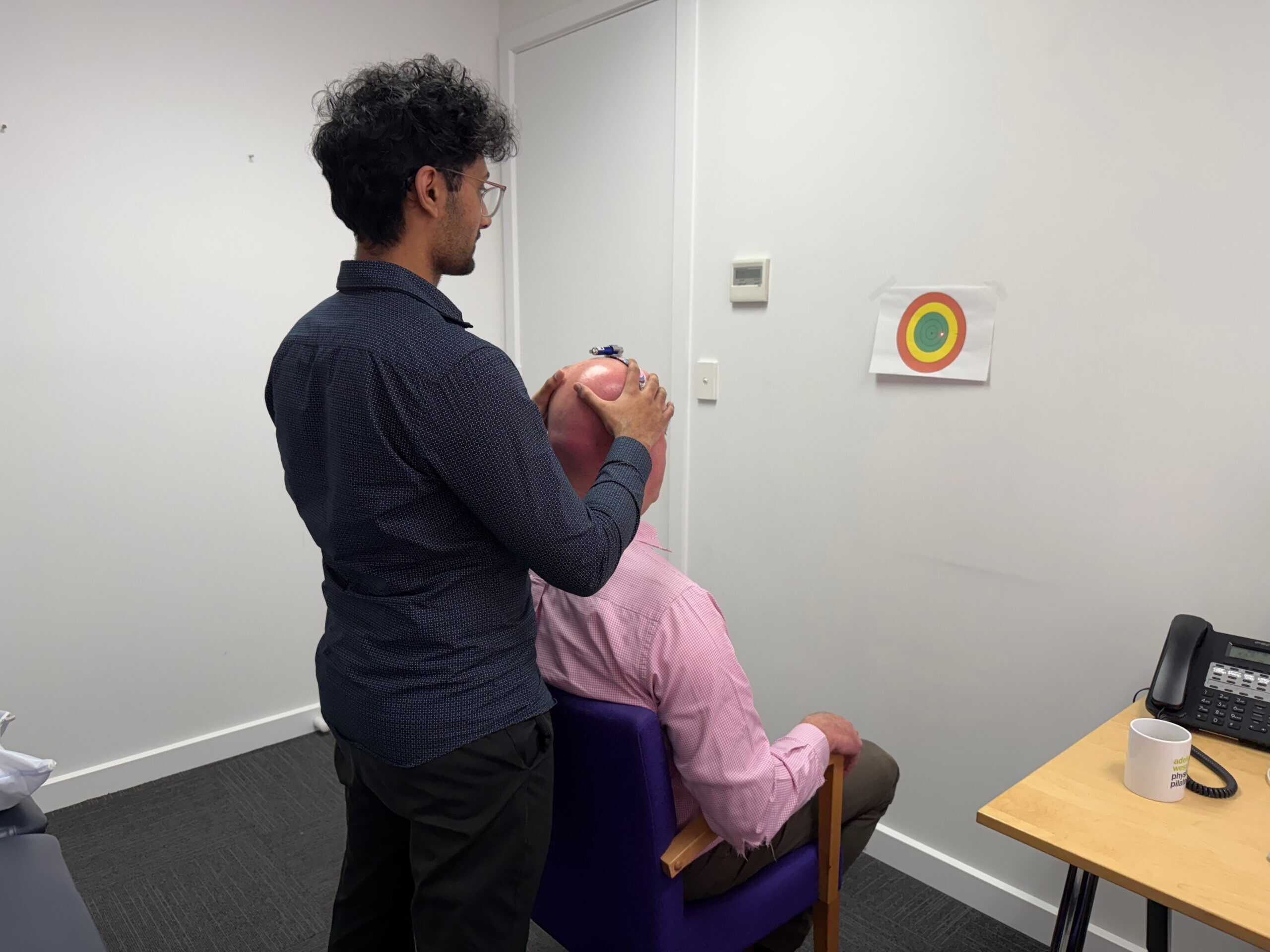
The physical examination involves safety testing of the integrity of the upper neck ligaments and important bony structures.
We are then looking for findings that give credible suspicion of the upper cervical spine involvement and help us identify which specific part of the neck might be involved.
We can do that by reproducing the typical head pain in the typical area where the tension-type headache is felt.
If that pain reduces and is abolished by maintaining the pressure on that joint, it is deemed to be relevant to your headache experience.
4. Treatment process
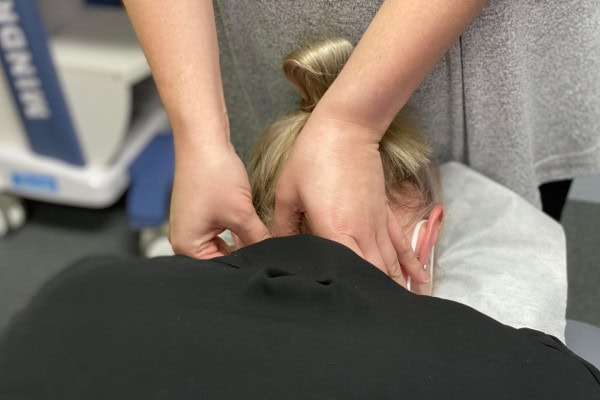
Once we determine from our examination if the cervical spine is involved and which levels are likely involved, we can implement specific manual therapy directed at our findings.
We are able to track the effectiveness both by physical findings, and your headache behaviour compared to the typical behaviour that we have recorded at the beginning.
Early in the process, we introduce neck exercises to amplify the effects of treatment.
The results of this approach are relatively quick. We can usually say in that first session if the upper neck isn’t involved and within 5 treatment sessions, we will be able to confirm that our treatment approach is working (though often there is a noticeable change earlier than that).
There often needs to be further consideration given to other modifiable factors that might be helping maintain or contribute to sensitivity like:
- healthy eating: which often means a diet of less processed foods and more thought given to anti-inflammatory foods
- stress management
- general exercise levels
- healthy sleep habits
- ergonomic improvements
Prevention strategies for tension headaches
All headache and migraine types can potentially have a contribution from the upper cervical spine, but it is important to acknowledge that the amount of that contribution varies from person to person.
The neck can be the dominant factor for many people, and in others, it is one of many.
Therefore, the prevention strategies are quite individual and are something that we determine during the treatment process.
These may include:
- neck mobility exercises: if there is found to be an upper cervical component, we will show each patient their best exercises to maintain their upper neck mobility.
- neck strengthening exercise: some patients benefit from specific deep neck flexor strengthening exercises
- upper body strengthening exercise: some people have inadequate upper body strength for their functional needs, which needs to be addressed
- general exercise: a universal prevention strategy for most headache disorders is increasing activity and exercise levels to approximately 30 minutes of moderate-intensity exercise, 2-3 times a week.
- dietary changes: reducing processed foods and eating more green leafy vegetables is an easy way to address potential contribution of a low level systemic inflammation
- healthy sleep habits: can be a key factor in maintaining sensitivity
- ergonomic improvement and postural habits: avoiding sustained positions during the day and introducing more movement is key.
Although self-management is our goal, some patients benefit from occasional treatment to maintain cervical mobility once their condition is under control.
For a deeper dive into the things you can do to help yourself get your headaches under control, download our free guide about our 5 top tips for fewer headaches.
Conclusion
Tension-type headaches are more complex than once thought.
The underlying neurophysiology isn’t different to other headache and migraine types – it involves the trigeminocervical nucleus being in a sensitised state.
There are potentially many factors involved in tension-type headaches, but we find that the upper cervical contribution to be a frequent ‘player’, and we make this a priority to examine the upper neck to rule in or exclude its involvement.
We use this modern understanding to provide comprehensive, individualised treatment plans. Our approach combines targeted manual therapy, personalized exercises, and lifestyle strategies to address the root causes of tension headaches.
For more insights into managing your headaches, download our free guide “Our 5 Top Tips for Fewer Headaches.” This resource provides practical strategies you can implement immediately to start your journey towards headache relief.
Don’t let tension headaches control your life. Take the first step towards reclaiming your well-being today!
Looking for an alternative to medication?
HAVE A FREE CHAT WITH A WATSON HEADACHE-TRAINED PHYSIO
Book online by clicking the button below or call us on 8356 1000 to organise a time.
Learn about all your options from physios understand tension-type headaches.